


2026 Global Paper Bag Machine Market Trends: How Seamless Technology Is Shaping the Next Growth Cycle
Executive Summary
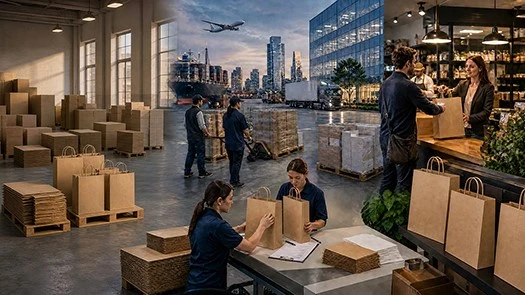
The global paper bag industry is entering a more demanding growth cycle. Retailers, foodservice operators, e-commerce companies and packaging converters are increasing their use of paper-based formats, but buyers are no longer evaluating paper bags only as a material alternative to plastic. They are also evaluating production economics, visual quality, material efficiency, regulatory readiness, changeover speed and the supplier's ability to support a multi-market operation.
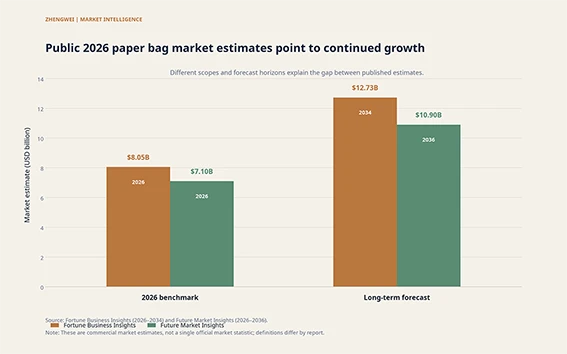
Commercial market studies point in the same direction, although their estimates differ because they define the market differently. Fortune Business Insights estimates the global paper bag packaging market at USD 7.64 billion in 2025, rising to USD 8.05 billion in 2026 and USD 12.73 billion by 2034, representing a projected CAGR of 5.90%. Future Market Insights estimates the broader paper bags market at USD 7.1 billion in 2026, reaching USD 10.9 billion by 2036 at a CAGR of 4.4%. These figures should not be combined into a single "official" market size: the two studies use different scopes, segments and forecast periods. Nevertheless, both indicate a structurally expanding market rather than a short-lived substitution trend.
For machinery buyers, the implication is practical. Growth in finished paper bag demand creates opportunity, but demand alone does not guarantee equipment profitability. The winning production platform will be the one that converts a wider range of paper grades, bag formats and order profiles into saleable output with stable quality. This is where seamless technology becomes strategically relevant.
1. The Market Is Growing, but the Buying Criteria Are Changing
The first generation of paper bag investment was primarily capacity-led. Converters asked whether a machine could produce a certain bag type at a certain nominal speed. In 2026, that question remains important, but it is no longer sufficient. Overseas buyers increasingly need to know how a machine performs under actual production conditions: after start-up, during a long run, across multiple paper grades, during a size change and after an abnormal stop.
The difference is between rated speed and effective output. Rated speed is a machine specification under stated conditions. Effective output is the number of accepted bags produced per available production hour after accounting for set-up, waste, micro-stoppages, quality rejects and operator intervention. For a packaging converter, effective output is the number that affects delivery capacity, unit cost and return on investment.
Several market forces are pushing the industry toward this more disciplined approach. Sustainable packaging demand is increasing, yet paper is not automatically a low-impact solution in every application. Buyers must consider fiber sourcing, basis weight, coatings, inks, adhesives, recyclability, transport efficiency and end-of-life infrastructure. At the same time, brand owners are asking for better print presentation and more distinctive bag structures. Labor availability, energy cost and shorter delivery windows are making manual or highly fragmented workflows less attractive.
The market opportunity is therefore becoming a manufacturing challenge: companies must offer more formats, more visual differentiation and more compliance documentation without allowing cost and quality variation to rise at the same rate.
2. Market Size: What the Available Forecasts Really Tell Buyers
Publicly available commercial forecasts provide useful directional evidence, but they should be read with methodological discipline. One report may include retail and foodservice bags together with industrial sacks; another may exclude machinery and focus only on finished bags. Some forecasts measure supplier revenue, while others estimate end-market demand. Regional shares may also be calculated on different bases.
| Public market estimate | 2026 reference point | Long-term outlook | What buyers should understand |
| Fortune Business Insights, paper bag packaging | USD 8.05 billion | USD 12.73 billion by 2034; 5.90% CAGR | Covers material, bag type, end use and regional segments; commercial estimate, not a government statistic |
| Future Market Insights, paper bags | USD 7.1 billion | USD 10.9 billion by 2036; 4.4% CAGR | Includes retail, foodservice and industrial paper bag formats; explicitly excludes standalone bag-making machinery |
| Strategic conclusion | -- | Direction of growth is positive | Use market reports to frame opportunity, then build a plant-level business case from target regions, product mix and effective output |
Fortune Business Insights identifies Asia Pacific as the largest regional market in its 2025 estimate, with a 33.97% share, while its segmentation places food and beverages among the leading end-use areas.Future Market Insights similarly identifies retail carry bags, foodservice bags and industrial applications as important demand categories. The common message is not that one bag format will dominate everywhere. The common message is that demand is distributed across several use cases, each with a different equipment requirement.
For a machinery supplier, this distinction matters. A high-volume foodservice bag program may prioritize repeatability, hygiene-related process control and fast delivery. A premium retail bag program may prioritize sheet accuracy, surface quality, design flexibility and low visible defect rates. An industrial sack application may prioritize strength, valve or mouth construction and material handling. A buyer should therefore start with the intended product portfolio, not with the machine brochure.
3. The Four Structural Drivers Behind Global Growth
3.1 Regulation Is Moving Packaging Decisions Upstream
Regulation is making packaging design and manufacturing a boardroom issue rather than a downstream waste-management issue. In the European Union, the Packaging and Packaging Waste Regulation 2025/40 entered into force on 11 February 2025 and generally applies from 12 August 2026. It covers packaging and packaging waste regardless of material or origin, sets requirements related to manufacturing and composition, and aims to make packaging placed on the EU market recyclable in an economically viable way by 2030.
This does not mean that every paper bag is automatically compliant. A paper bag may include inks, coatings, handles, tapes, labels or adhesives that affect recyclability or local compliance assessment. Buyers importing machinery should therefore consider whether the supplier can support process documentation and material trials rather than merely offering a machine capable of forming a bag.
The practical effect of regulation is a stronger demand for traceability. Converters need to know what materials were tested, under which conditions, with what quality outcome and for which application. Equipment that supports repeatable settings, recipe management and documented changeover procedures can reduce the risk of compliance claims being disconnected from actual production.
3.2 E-Commerce and Foodservice Are Expanding the Format Mix
E-commerce and foodservice are not identical markets, but both increase the importance of packaging availability, delivery speed and branding. Online retail creates demand for logistics-friendly formats and printed packaging that communicates brand identity outside the physical store. Foodservice creates demand for high-throughput bags, consistent dimensions and material choices suitable for the intended food-contact application.
The market is therefore moving toward a more diverse order portfolio. A converter may need to serve large repeat orders and smaller, highly customized runs within the same month. This favors equipment with predictable changeovers, modular tooling, accessible diagnostics and a process window that can be documented across paper grades.
3.3 Premiumization Is Turning the Paper Bag into a Brand Asset
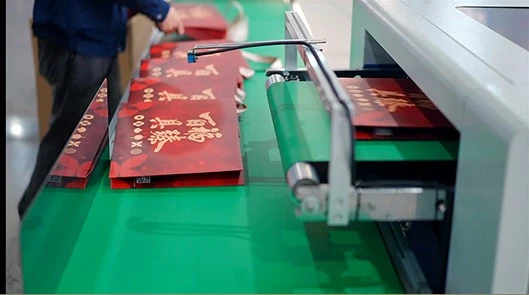
Paper bags are increasingly visible at the point of sale and in social-media content. In premium retail, cosmetics, fashion, gifts and specialty food, a bag is part of the customer experience. Surface cleanliness, print continuity, bag squareness, handle positioning and tactile consistency can influence how the brand is perceived.
This trend creates space for differentiated manufacturing technologies. A converter that can offer a cleaner side-wall appearance, more continuous graphics or a distinctive three-dimensional structure may be able to move beyond commodity price competition. However, premiumization also raises the cost of defects. A small seam mark, glue stain or alignment error that might be acceptable in a basic carrier bag can be unacceptable in a luxury retail program.
3.4 Labor and Operating Costs Are Increasing the Value of Integration
Paper bag production is a sequence of high-frequency, interdependent actions. When feeding, forming, gluing, folding and collection are managed as separate or heavily manual stages, labor and work-in-process inventory can become significant. Integration does not eliminate the need for skilled personnel; it changes where their expertise is used. Operators spend less time repeating basic handling tasks and more time managing recipes, quality checks, preventive maintenance and exception recovery.
For overseas buyers, automation should therefore be evaluated as a production-system decision. The relevant questions include whether one operator can manage the intended line, how quickly a fault can be identified, how recipe parameters are protected, and whether the supplier provides training for both operators and maintenance staff.
4. Why Seamless Technology Matters in the 2026 Market
The phrase "seamless paper bag" should be defined precisely. In the process described by Zhengwei's public technical documentation, the bag begins with a pre-die-cut sheet. The bag outline is defined before folding, and the sheet is formed along precision creasing lines rather than first being converted into a tube and then closed with a side seam. The result is a paper bag with continuous side walls and no conventional side-seam line.
The underlying engineering principle is the separation of two functions. Sharp blades make complete cuts that define the unfolded bag; rounded or creasing tools compress the paper fibers to guide folding without fully cutting the material. This approach transfers the process challenge from side-seam closure to the coordinated control of die-cutting, creasing, sheet feeding, folding and structural connection.
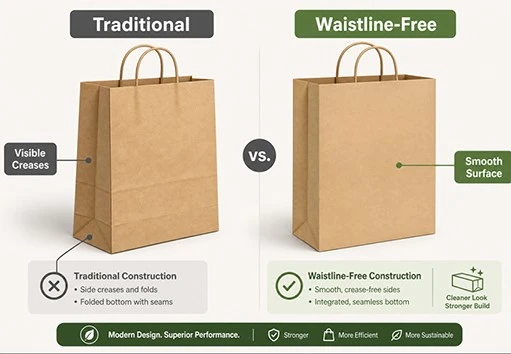
That change creates four potential sources of value.
| Value area | Potential benefit of a seamless forming route | Buyer's verification question |
| Visual quality | Continuous side walls can support a cleaner, more uninterrupted appearance | What are the measured limits for seam-line absence, fold offset and surface defects? |
| Design flexibility | The artwork can be planned around a flat, pre-die-cut structure rather than a tube with a closing seam | Can the supplier provide die-line guidance and approved sample bags for the target artwork? |
| Process integration | Fewer side-seam-related operations may simplify the production flow | Which operations are integrated, and what is the actual effective output after set-up and rejects? |
| Product differentiation | Premium retail, cosmetics, fashion and gift applications may benefit from a distinctive bag structure | Which paper grades, sizes and handle or bottom structures have been tested? |
Seamless technology is not a universal replacement for every paper bag machine. It is most relevant when the target market values appearance, structural continuity, flexible formats or a differentiated product proposition. The economics should be tested against the buyer's product mix, not assumed from the technology label.
5. Regional Outlook: Different Markets, Different Equipment Priorities
Asia Pacific: Scale, Supply-Chain Depth and Flexible Manufacturing
Asia Pacific is identified by Fortune Business Insights as the largest regional market in its 2025 estimate.The region combines large consumer markets, established paper and packaging supply chains, strong manufacturing capabilities and significant e-commerce activity. For equipment buyers, this creates two parallel opportunities: high-volume domestic production and export-oriented manufacturing for overseas brands.
Competition is also intense. Buyers in the region may compare suppliers on price, delivery and local service, but international customers increasingly add documentation, safety, remote support and long-term spare-parts availability to the evaluation. A competitive machine must therefore be cost-efficient without being opaque.
Europe: Compliance Readiness and Premium Packaging
Europe's market is shaped by sustainability expectations, packaging regulation and demand for premium design. The PPWR's general application from 12 August 2026 raises the importance of material and process documentation.[3] European buyers are likely to ask not only whether a machine can produce a paper bag, but whether the producer can help them maintain repeatable quality for approved materials and supply the technical file, manuals, conformity documentation and validation records expected in an industrial purchase.
Seamless technology may be attractive in Europe where premium retail, cosmetics, fashion, specialty food and brand-led packaging are important segments. The strongest commercial proposition will combine visual differentiation with transparent engineering evidence.
North America: Productivity, Recycling Economics and Regional Supply
North American buyers typically place strong emphasis on throughput, labor productivity, serviceability and supply reliability. Paper recycling infrastructure, regional regulations and customer-specific sustainability commitments can influence material selection. A machine supplier entering this market should be prepared to discuss installation requirements, electrical standards, preventive maintenance, spare parts, operator training and response time-not only the forming principle.
Latin America, the Middle East and Africa: Application-Led Growth
Emerging markets often present a more application-led opportunity. Retail modernization, foodservice growth, local manufacturing and restrictions on certain plastic formats can support paper bag demand, while financing, infrastructure and technical service may determine the pace of equipment adoption. In these markets, modular configurations, robust mechanical design, straightforward maintenance and local partner support can be as important as maximum speed.
The strategic conclusion is that there is no single global specification. A machine suitable for premium European retail bags may not be the most efficient choice for a high-volume foodservice program. Regional growth should be translated into a specific target application, material profile and service model before equipment is selected.
6. Competitive Landscape: From Machine Sales to Manufacturing Partnerships
The paper bag market includes large packaging groups, regional converters, specialty bag manufacturers and equipment suppliers. Commercial research identifies major finished-packaging participants such as Smurfit Kappa, International Paper, Huhtamaki, Mondi, Rengo and Oji Holdings, among others.[1] These companies operate at different points of the packaging value chain, so their presence should not be interpreted as a direct ranking of paper bag machine manufacturers.
For machinery suppliers, the competitive landscape is being shaped by three capabilities. The first is application engineering: the ability to convert a customer's bag concept into a stable machine process. The second is automation depth: the ability to manage feeding, forming, inspection, diagnostics and recipe control as one system. The third is lifecycle support: the ability to keep the line productive after installation through training, spare parts, software support and process improvement.
Since our foundation in Ruian, Zhejiang, in 2006, Zhengwei Machinery has continuously expanded its capabilities from non-woven bag machinery to three-dimensional bag-making systems and seamless paper bag production technology. Our current seamless paper bag machine portfolio includes the ZW-A11, ZW-A13, ZW-A11 Pro, ZW-A10 MINI and ZW-A14 MAX. Each model is developed for specific combinations of bag format, production scale, material requirements and automation objectives.
We encourage prospective customers to evaluate the complete production solution rather than relying on nominal machine speed alone. Before final selection, our team works with customers to confirm the target bag structure, paper grade, machine configuration, technical agreement, acceptance criteria, compliance documentation, sample results and after-sales support requirements.
7. What Overseas Buyers Should Verify Before Investing
A 2026 procurement decision should be based on a structured verification process rather than a single headline specification. The following questions are designed for a first-stage supplier comparison.
| Procurement stage | Questions to ask the supplier | Evidence to request |
| Application fit | What bag formats, dimensions, paper grades and handle structures are supported? | Approved sample range, material test records and die-line drawings |
| Effective capacity | What is the accepted output under a defined bag specification, including set-up and normal rejects? | Time-stamped production test, reject log and test conditions |
| Changeover | How long does it take from the last accepted bag of one size to the first accepted bag of the next size? | Changeover procedure, recipe screenshots and recorded test data |
| Quality | How are fold offset, bag squareness, die-cut edge, connection strength and surface defects measured? | Inspection standard, gauges, sample report and acceptance limits |
| Automation | Which sensors, servo axes, interlocks and diagnostic functions are included? | Electrical drawings, control description and alarm list |
| Safety and compliance | Which conformity documents apply to the supplied configuration and destination market? | Declaration, risk assessment summary, manuals and applicable certificates |
| Lifecycle support | What training, remote support, spare parts and preventive maintenance are included? | Service scope, response process, spare-parts list and training plan |
| Total cost | What are the installed cost, utilities, consumables, tooling, maintenance and recommended staffing assumptions? | Total-cost-of-ownership model with explicit assumptions |
For seamless equipment in particular, the buyer should request a sample-development process before placing a production order. The test should use the buyer's intended paper, artwork or representative printed sheet, target bag dimensions and expected loading condition. The goal is to identify the complete process window, not merely to produce one attractive sample.
8. Market Forecast: What Will Shape the 2026–2030 Equipment Cycle?
The next equipment cycle will likely be shaped by the interaction of five trends. First, regulation will continue to make recyclability, material composition and documentation part of the purchasing conversation. Second, customers will ask converters for more formats and shorter lead times, increasing the value of quick changeover and recipe-based production. Third, premium packaging will reward cleaner surfaces and more distinctive structures. Fourth, labor and energy costs will keep attention on effective output rather than nominal speed. Fifth, brand owners will expect suppliers to provide evidence rather than generalized sustainability claims.
Seamless technology sits at the intersection of these trends. It can support product differentiation by removing a conventional side seam; it can support design freedom by starting from a pre-die-cut sheet; and it can support process integration by aligning forming operations around a common sheet and crease geometry.Yet technology adoption will depend on execution. A seamless machine must demonstrate stable feeding, repeatable folding, acceptable material utilization, reliable connections and maintainable controls under the customer's real conditions.
The most credible forecast is therefore not a fixed percentage of future market share for one technology. It is a continued shift toward equipment platforms that make quality, flexibility and compliance measurable. Suppliers that can provide that evidence will be better positioned to convert industry growth into durable customer relationships.
Conclusion: Growth Will Belong to Predictable Production
The global paper bag market is expanding, but the opportunity is becoming more selective. Market research forecasts indicate continued growth in finished paper bag demand, while regulation and customer expectations are increasing the technical requirements for the equipment that produces those bags.
For overseas buyers, the strategic question is not simply whether paper bags will replace some plastic formats. It is whether a production line can generate the right bag, at the right quality, in the right region, with a cost structure that remains competitive when materials, labor, energy and compliance requirements change.
Seamless paper bag technology offers a compelling answer for applications where continuous side walls, premium appearance, structural differentiation and integrated forming create measurable value. Zhengwei's publicly described process-pre-die-cut sheets, precision cutting and creasing, followed by controlled folding-illustrates how a forming principle can become a broader manufacturing proposition.
The buyers best positioned for the next growth cycle will be those who evaluate technology through evidence: effective output instead of rated speed, total cost instead of purchase price, validated materials instead of generic compatibility, and lifecycle support instead of installation alone. In that framework, seamless technology is not merely a machine feature. It is a route toward more differentiated, more measurable and more resilient paper bag production.


